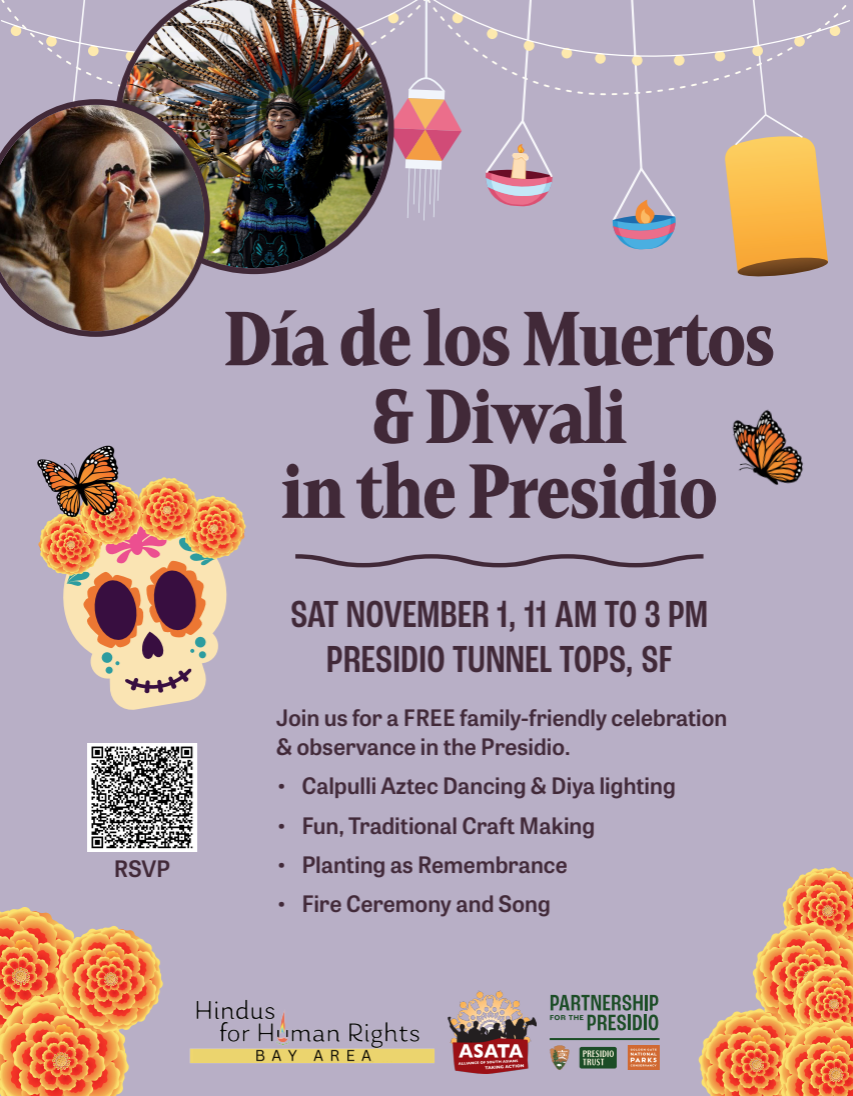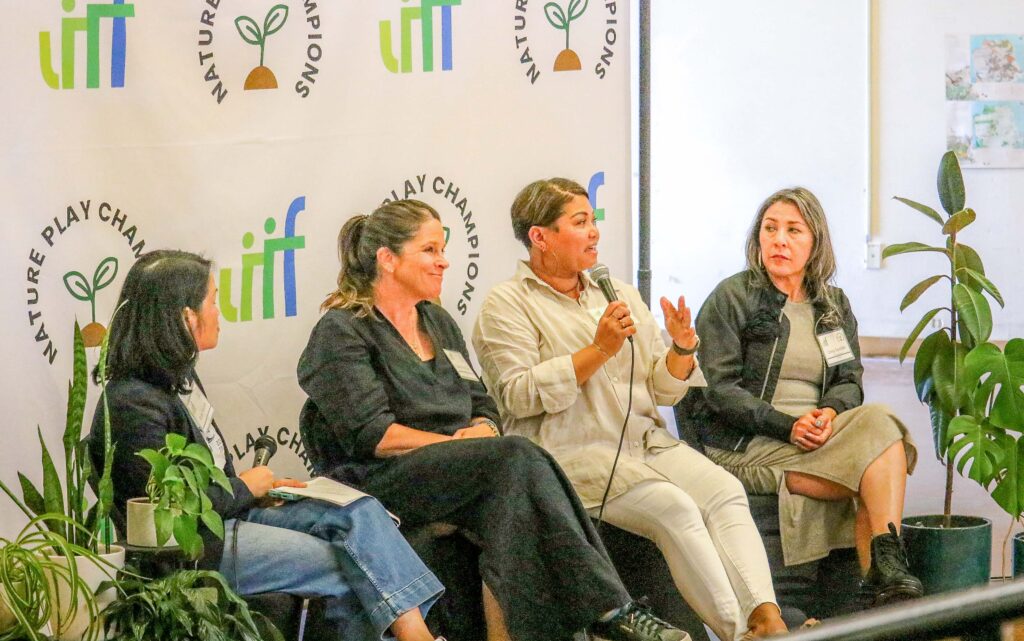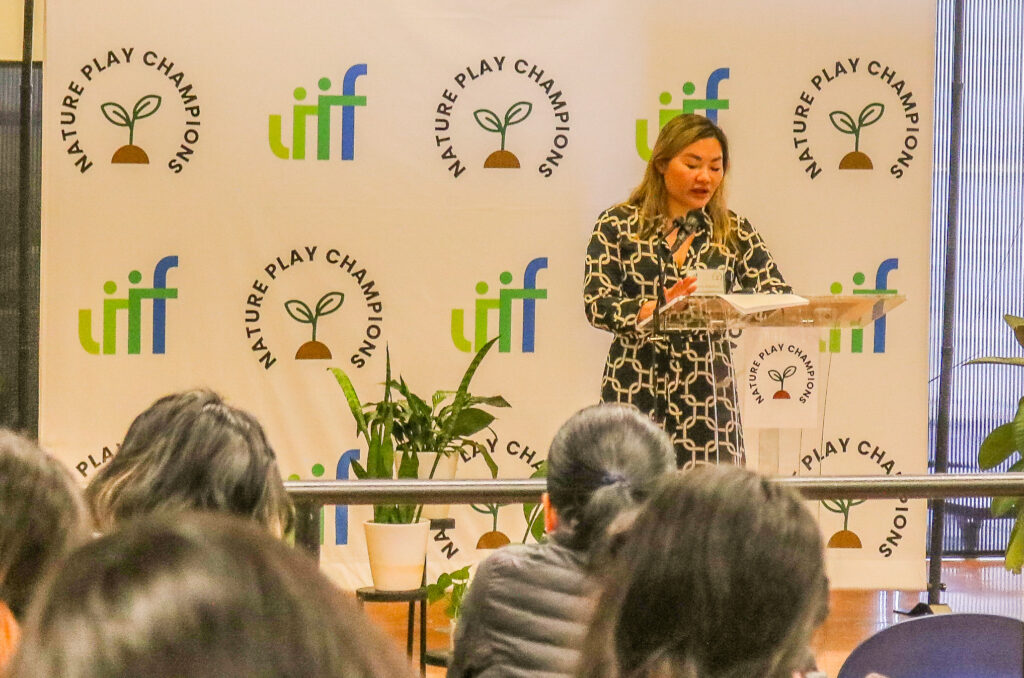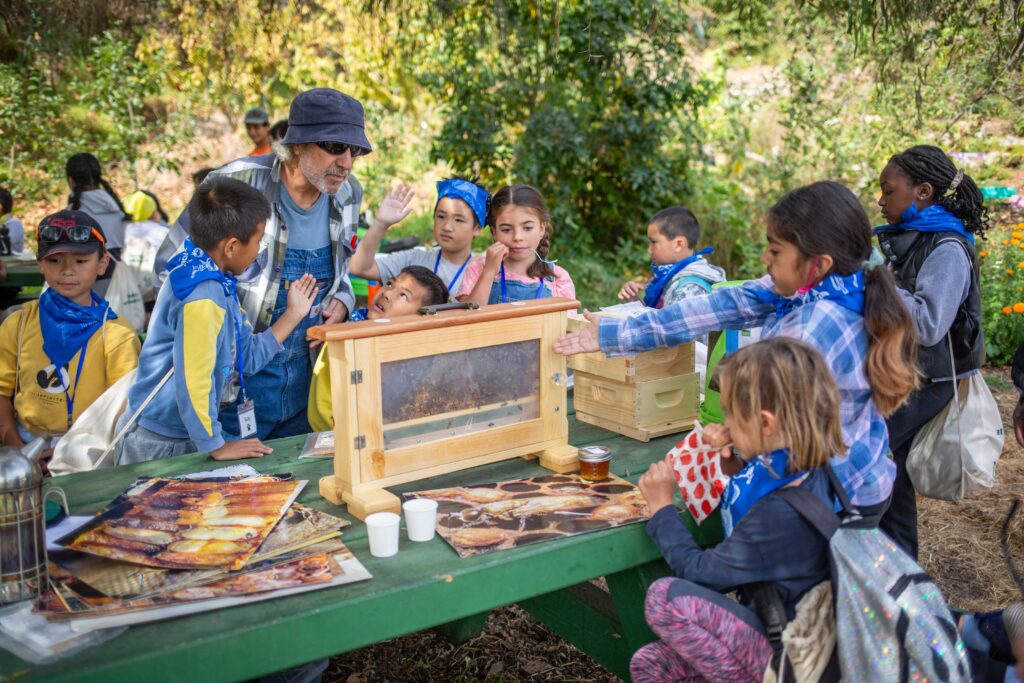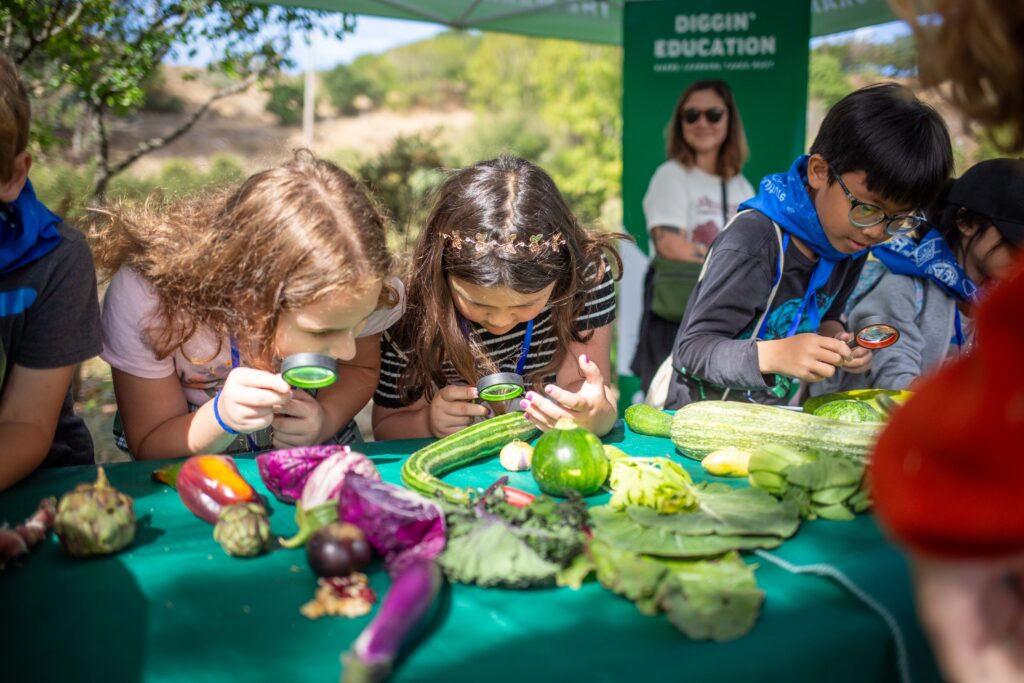
“What kind of light do we want to be?” When I had first envisioned walking with this question at this year’s Diwali and Día de los Muertos program at the Crissy Field Center, I did not anticipate over 1,000 participants from our local Bay Area communities to join me in this reflection. On Saturday, November 1, 2025, this annual park event transcended being just a program.
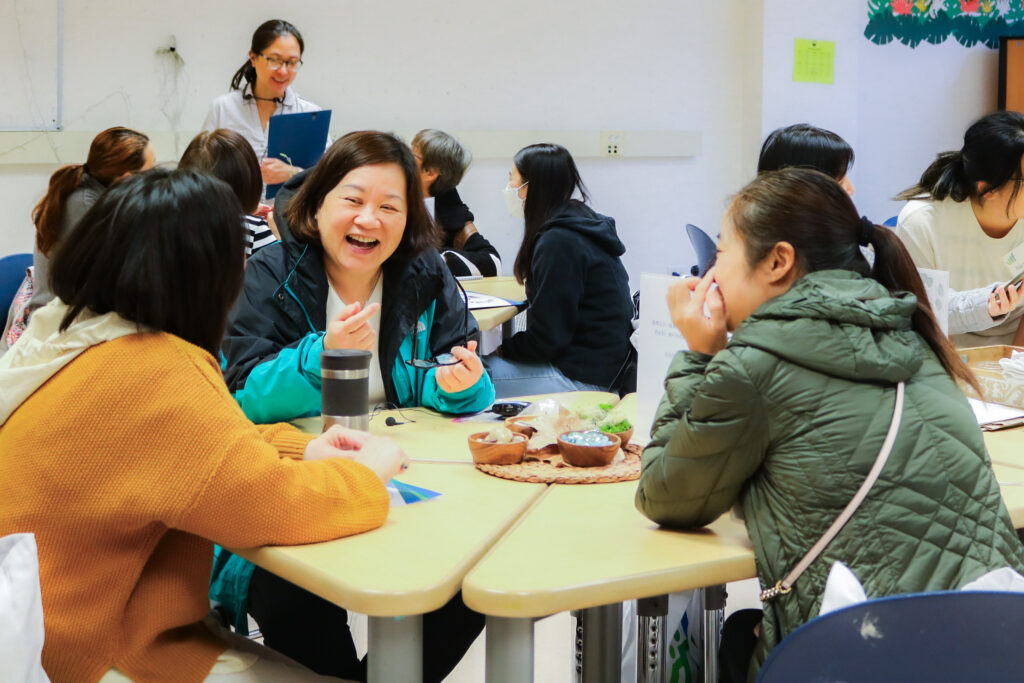
Multicultural, multifaith, multigenerational – as I moved from one activity station to another, I witnessed a sort of a cultural movement taking place in our parks, where stories of commonalities between these two traditions were exchanged, songs were sung, and plants were planted in memory of a loved one, and as a way of spreading light and hope. When communities gather beyond differences, when we turn to one another to share, a small spark turns into a ball of fire.
Over a decade ago, it was this curiosity and belief — what if we brought people from different cultures together in nature? What if a simple invitation to celebrate important observances and traditions with support from the natural world gave us an opportunity to deepen our connection with nature and each other?

First, a small diya (a traditional oil lamp made of clay) was lit at East Meadow at the Presidio Tunnel Tops. Just as the tiny flame brought attention to the light we all bring and hold within us, our strongest light force, our sun, came out from behind a thick, dark cloud, gesturing that there is light around us always, no matter how dark it might feel. A group of Calpulli Aztec dancers called upon our ancestors for guidance and blessings and paved the way for the rest of the day.


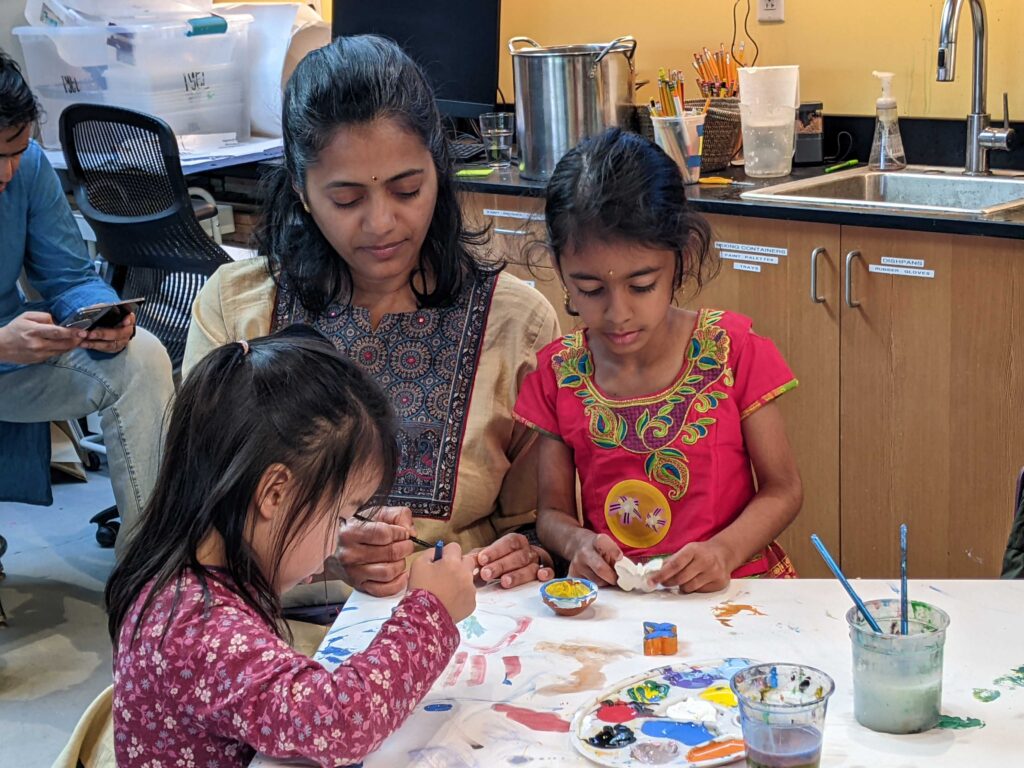
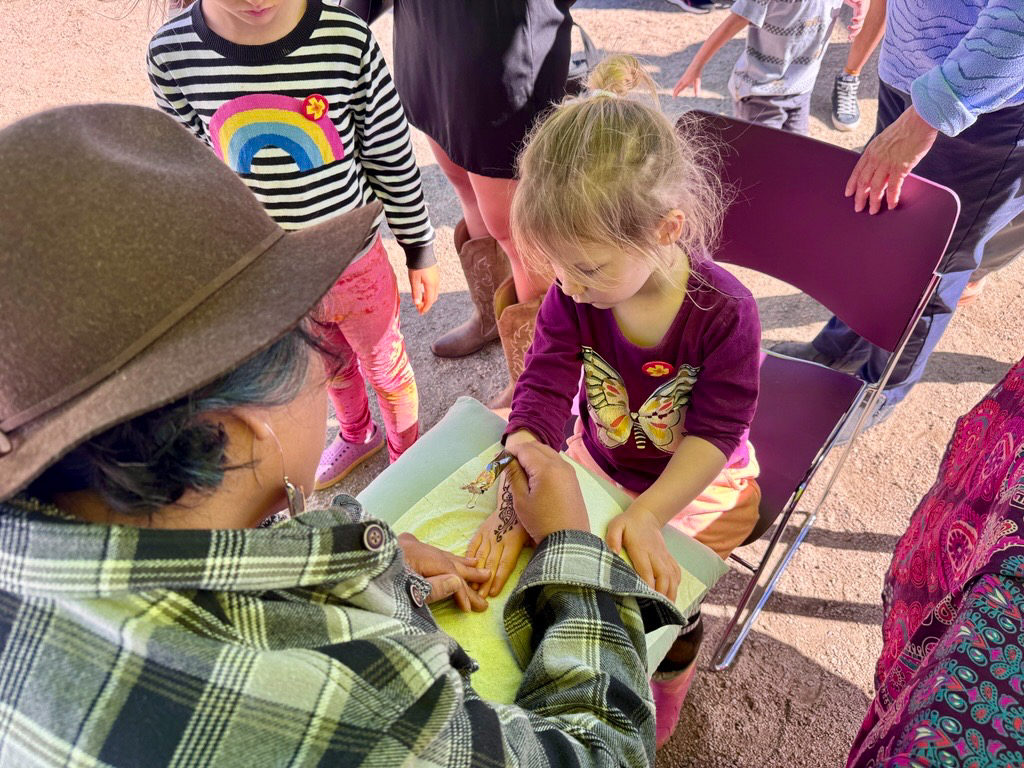
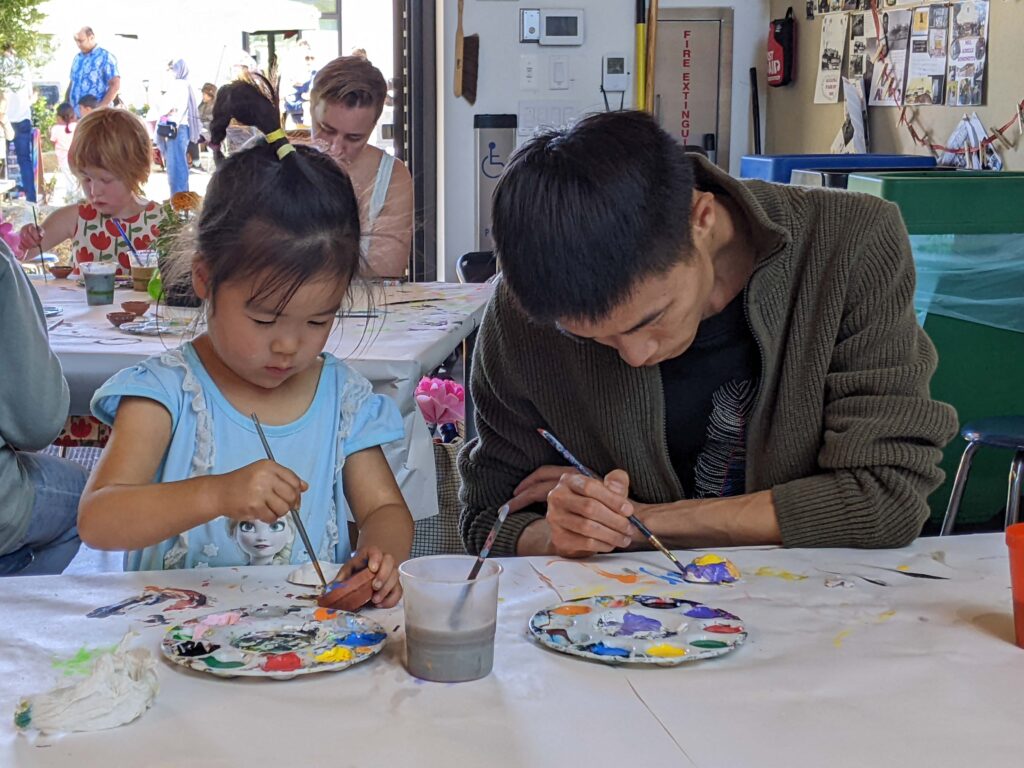
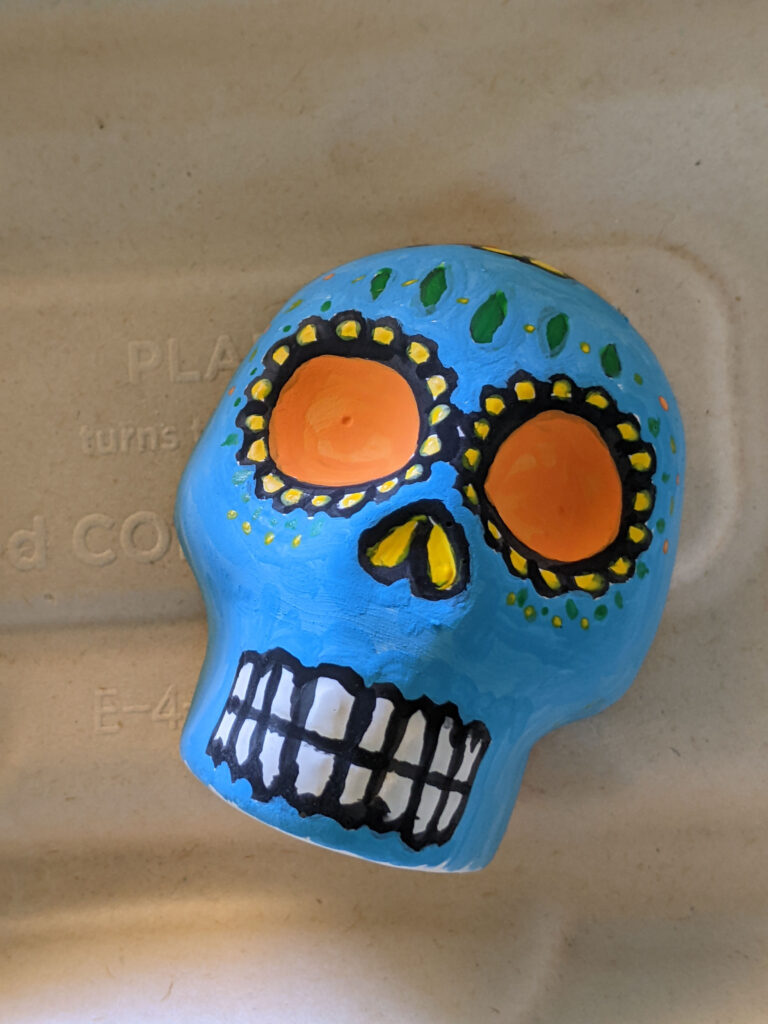
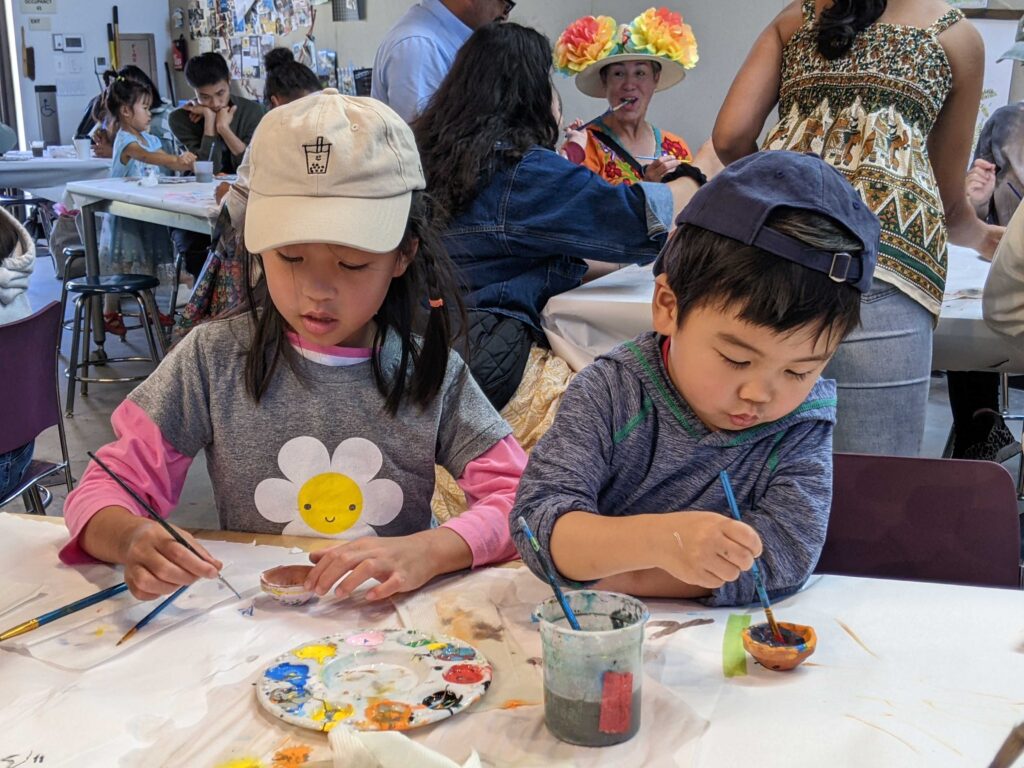
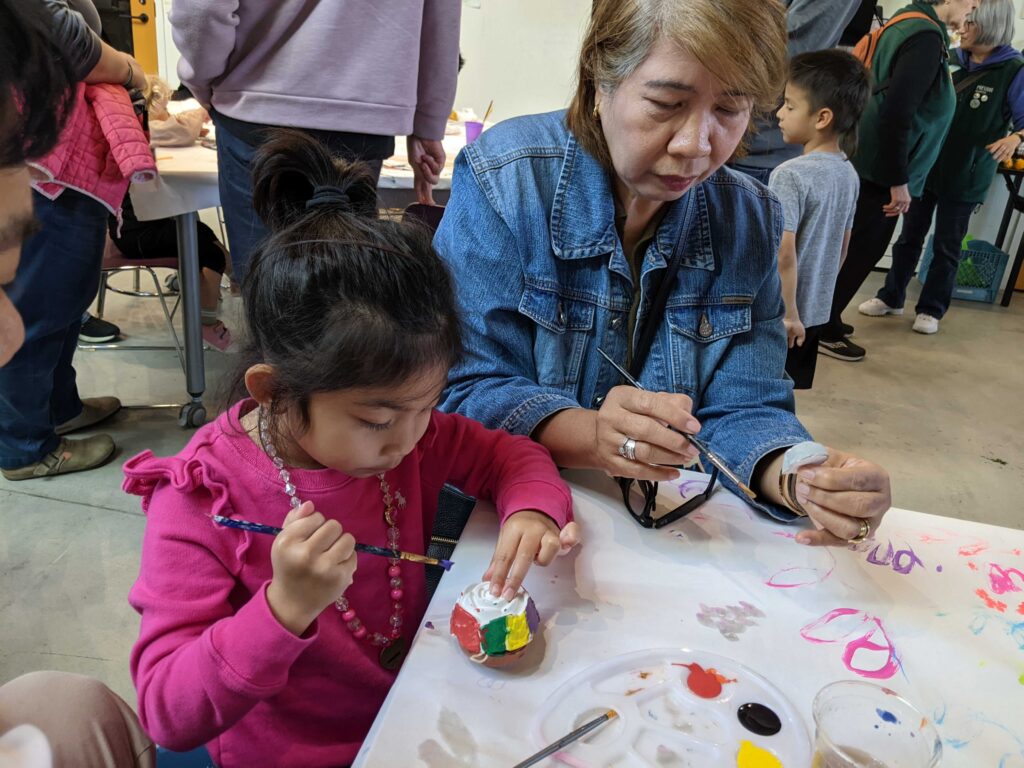
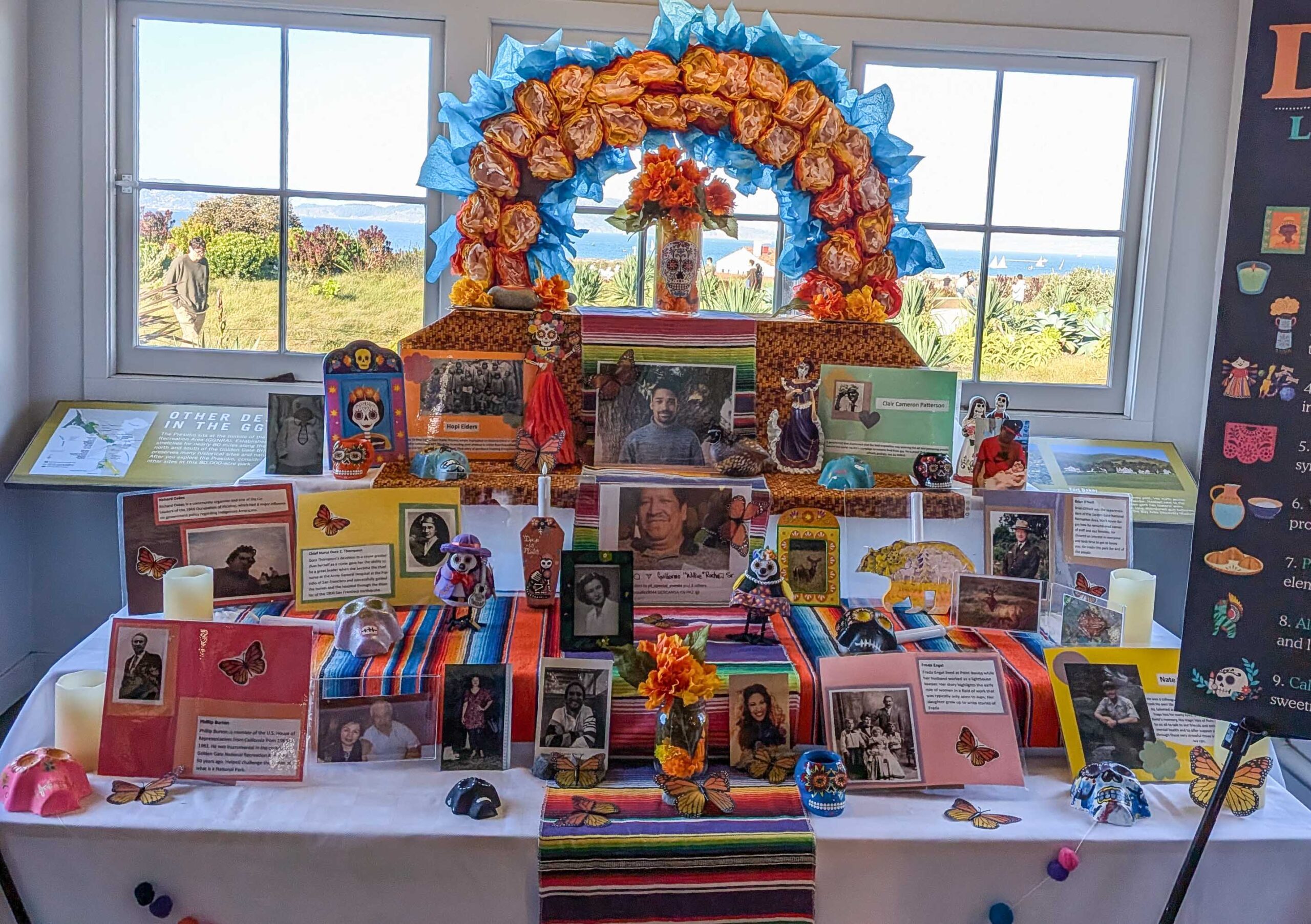
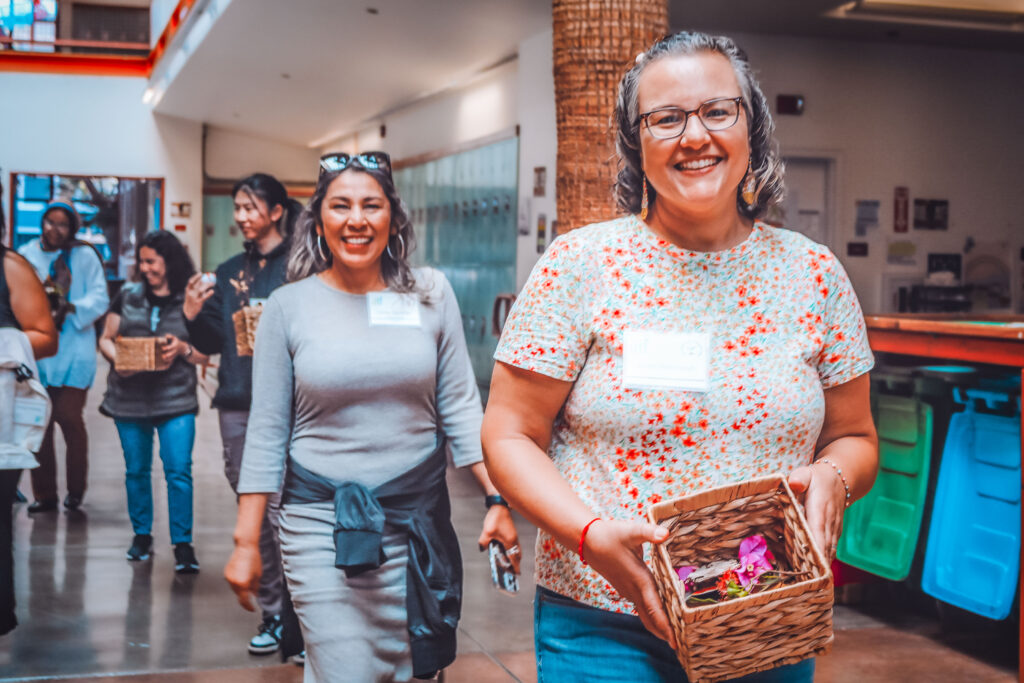
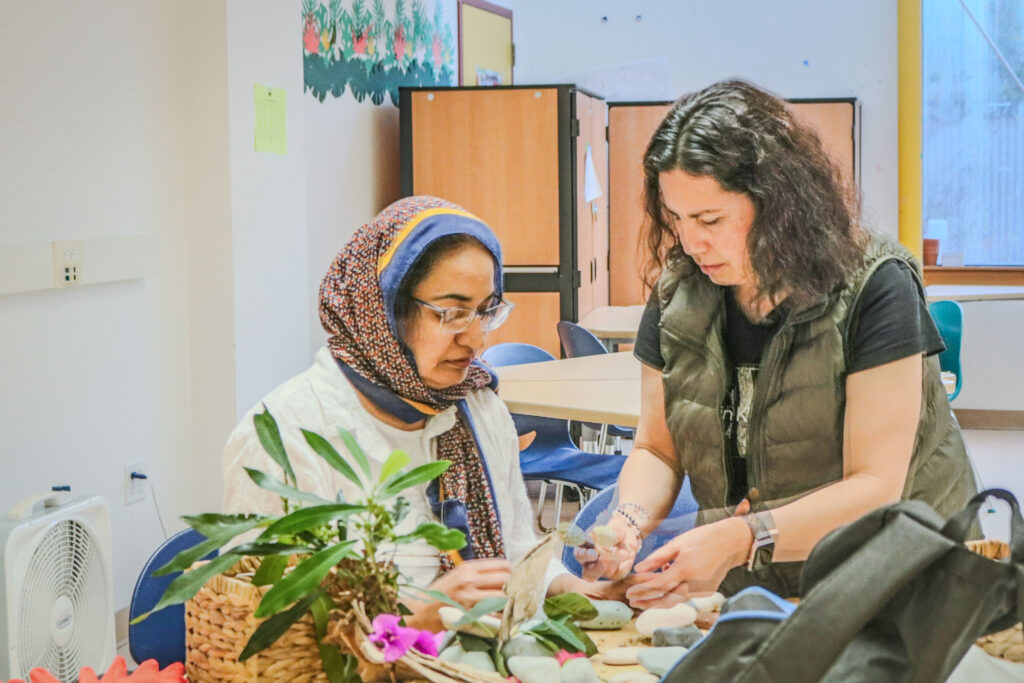
I happened to notice a mother and her two children, aged four and six. Watching them stop at every activity station—each carefully planned to bring awareness to different elements of Diwali and Día de los Muertos—brought tears of joy. At the Art Lab, they were drawn to the colors and paints, of course, where staff and volunteers supported calaca (a joyful depiction of skeletons, reminding people of their ancestors while also celebrating life) and diya painting—two joyous and sentimental objects they could take with them as a mementos. Then, the little ones made a paper flower each at the Science Lab, a tradition for Día de los Muertos. They insisted on carrying their freshly made calacas, diyas, and paper flowers even though their tiny hands were full, gingerly making their way to the face painting and henna station to get their share of temporary tattoos! Painting faces as calaveras (skulls) is a way to celebrate the memory of loved ones.


When I left them for a brief moment to attend to some logistics, I returned, only to find them at the rangoli station, now their hands and faces decorated with intricate henna and face paint designs that they were proudly showing off to all around them.
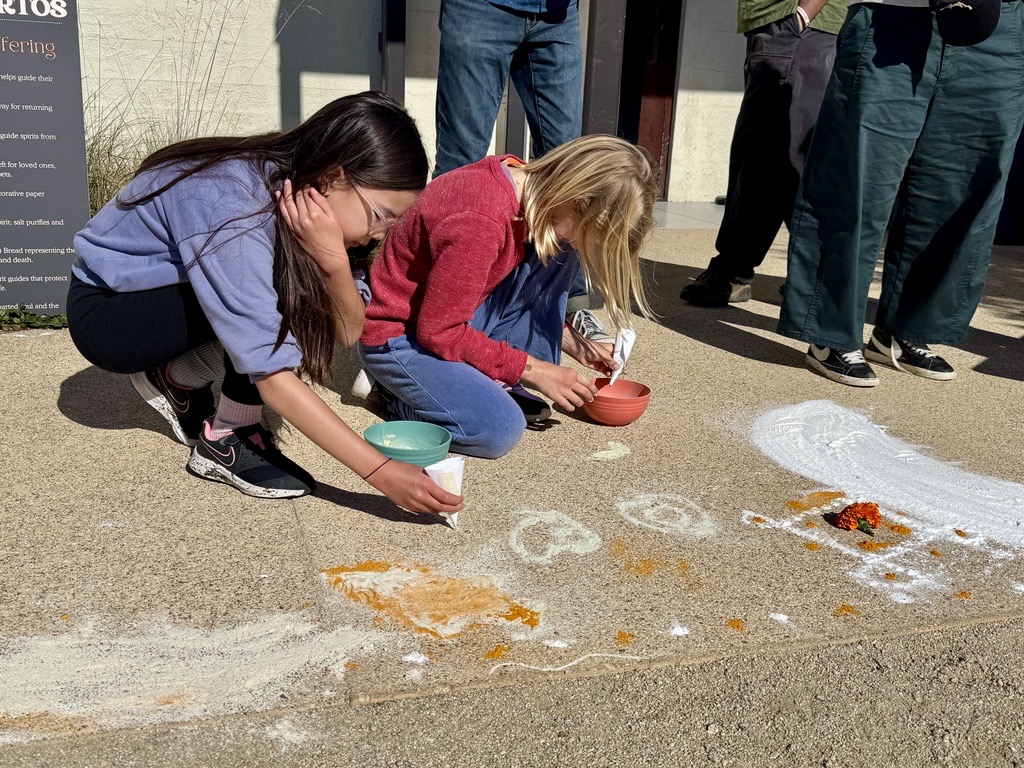
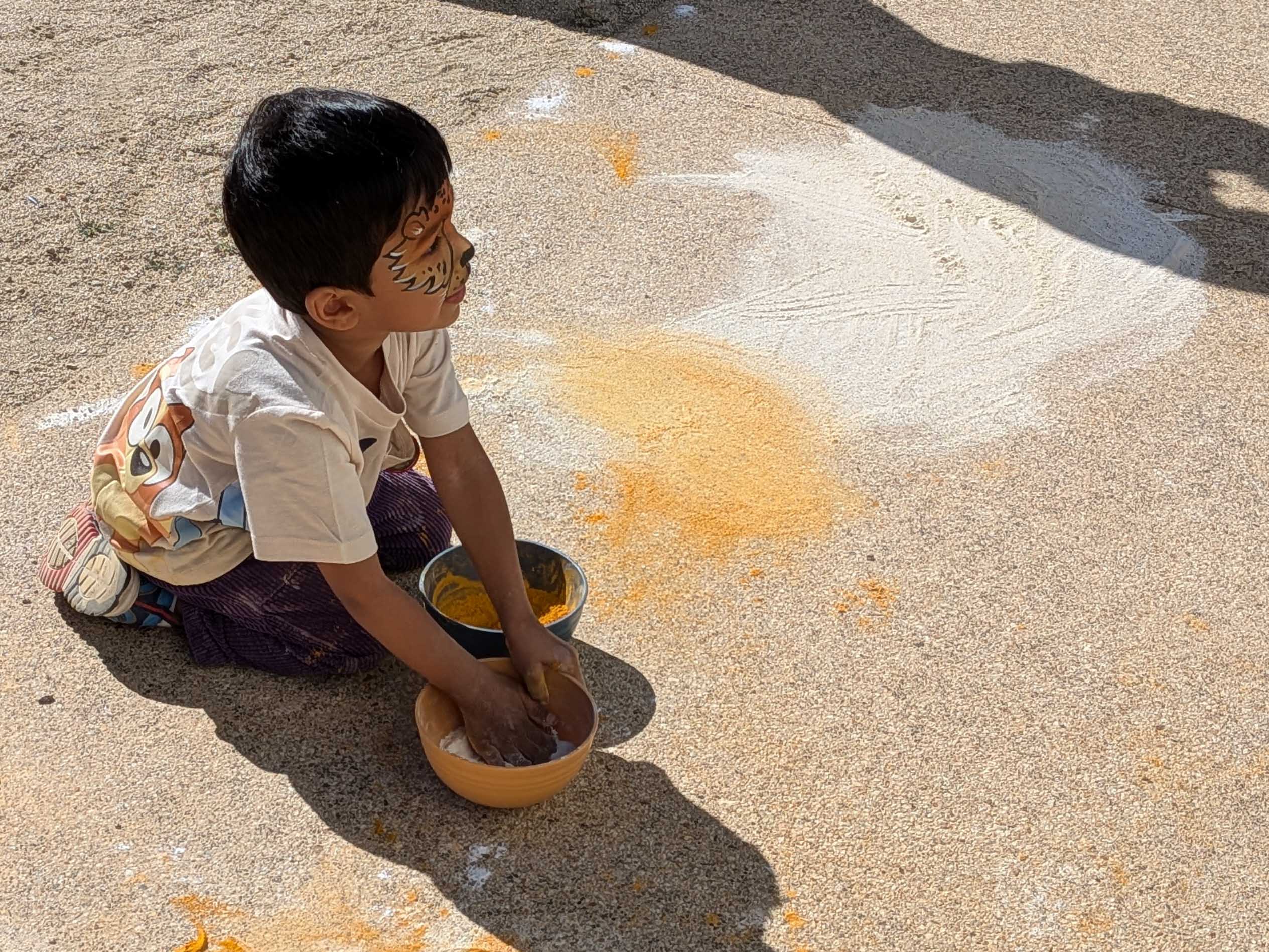
As I observed their tiny hands take a pinch of powdered rice flour and turmeric to create rangoli (a traditional Indian folk art) on the floor of the Courtyard, I wondered what these joyful traditional arts and crafts were sparking within them. I loved how rangoli was both meditative and fun, and I shared with my new little friends about kolam.


In her book Feeding a Thousand Souls, Dr. Vijaya Nagarajan shares a story about how, each day, around dawn in southern India, outside homes and places of gathering and worship, local women create kolams—a type of rangoli made from dry and wet rice flour. While this may seem like an artistic pursuit, it is an age-old ritual that Dr. Nagarajan says “feeds a thousand souls.” The ‘kolam’ is eaten by birds, ants, and worms over the course of the morning and before human life begins. It is an act of honoring life in all its forms and giving, as a way of receiving. The little ones asked me if the beetles, ladybugs, and grasshoppers would eat their rangoli.
“I was so amazed by the many cultures and ages that were in our midst. I’m used to one-culture community events. I was also touched by everyone’s sincere participation in the fire ceremony – no cynicism, just a willingness to go inward. We felt a sense of calm and acceptance as we sang. We need more events in nature like this!” – Roopa Mahadevan
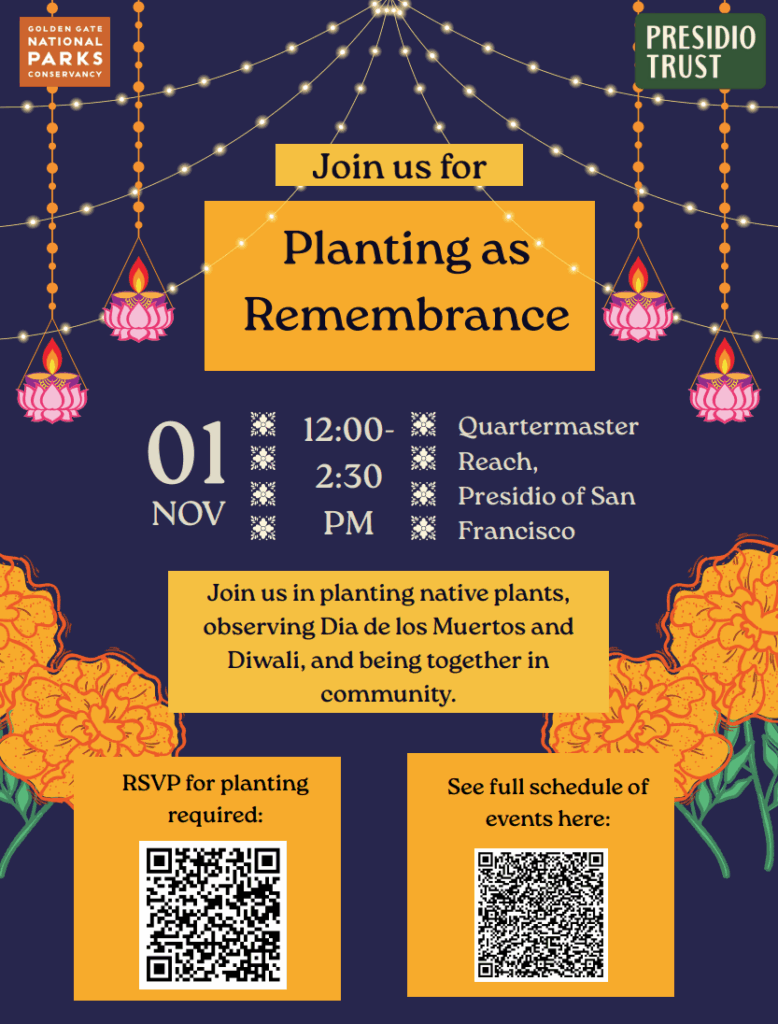
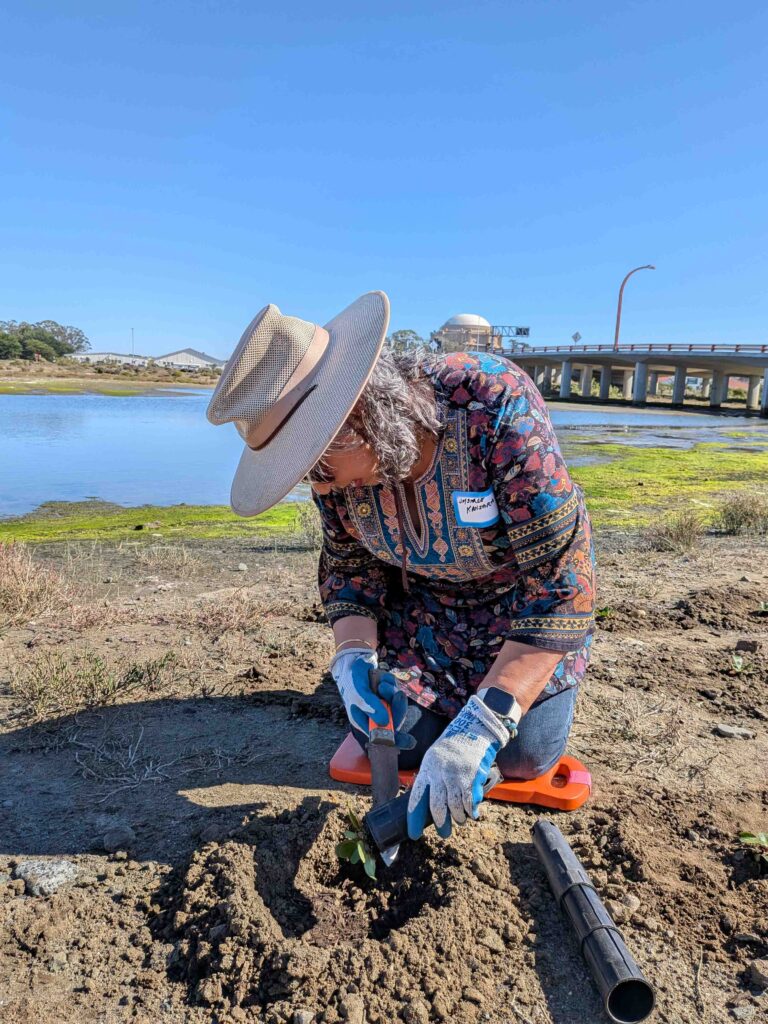
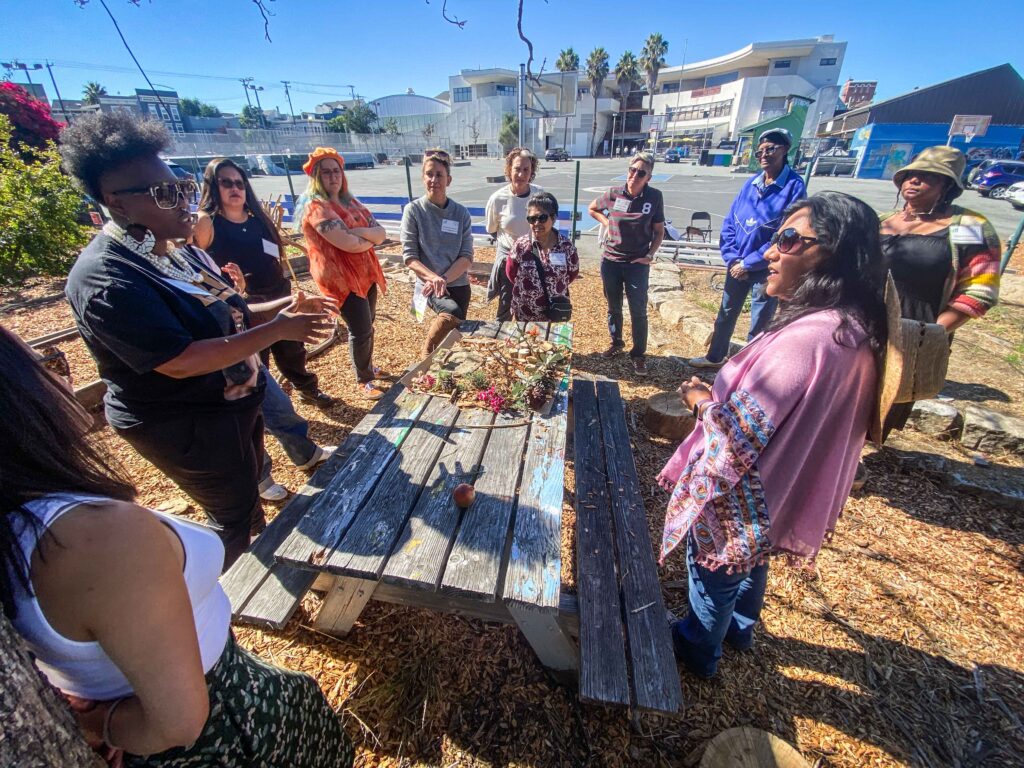
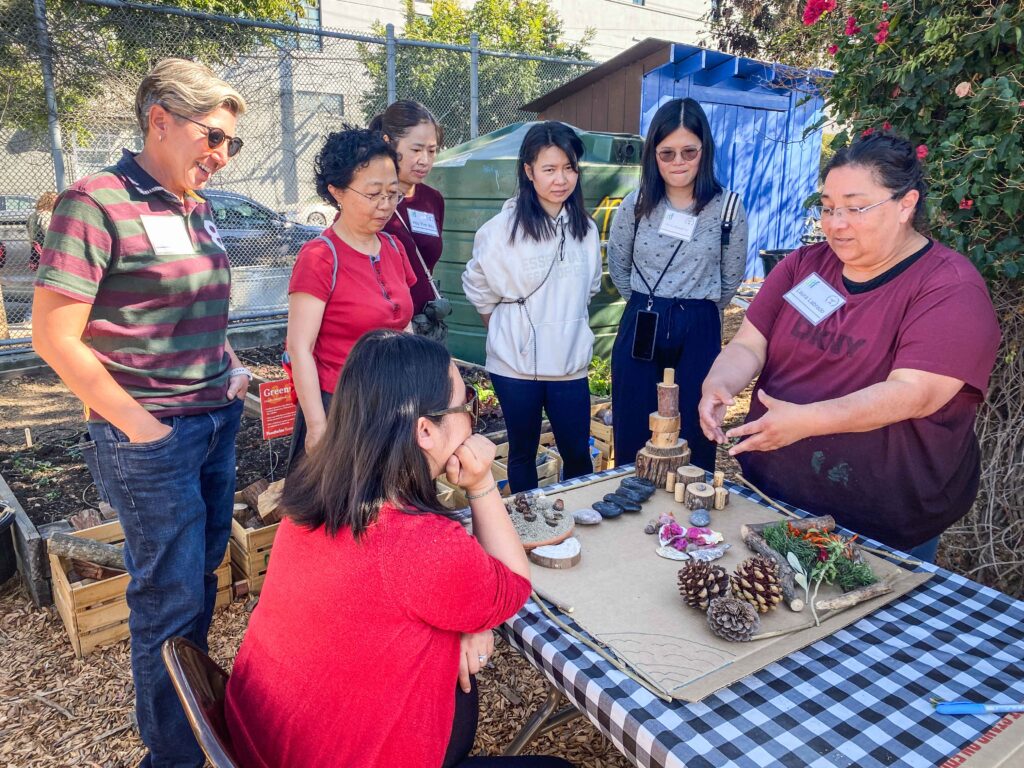
While the festivities hit a crescendo at the Center, nearby at Quartermaster Reach, a newly restored tidal marshland and a haven for local and migratory birds, volunteers and park stewards planted Pickleweed, Marsh Jaumea, Alkali Heath, and Marsh Gumplant, all California native plants grown with much love and care by our park’s native plant nursery. Two volunteers who had planted their first plants as part of a Diwali celebration ten years ago, reminisced with humility and pride, and shared with new volunteers how these plants had transformed both the landscapes and them, and were feeding a thousand species across our parklands! Hafsa Vahidy, a volunteer with the Alliance of South Asians Taking Action, shared, “It was an honor to remind planting participants to pause, sit, disinfect (a practice of cleaning our shoes with a disinfectant to protect a restoration site from pathogens), and reflect on the ritual of entering a protected marshland.”


A mother and her teenage son came to the program with just one wish — they wanted to plant three plants, specifically, in memory of their loved ones. A young woman planted just one plant and spent the rest of her time sitting in contemplation. I wondered if she had lost a loved one recently, just as I had lost my daddy. I, too, planted one in memory of him, next to hers.
Back at the Center, a fire was being prepared for the final closing ceremony of the day. While logs of wood were being arranged and tended to, Roopa Mahadevan and Diana Gameros tested the mic and speakers, their musical instruments, and their voices.

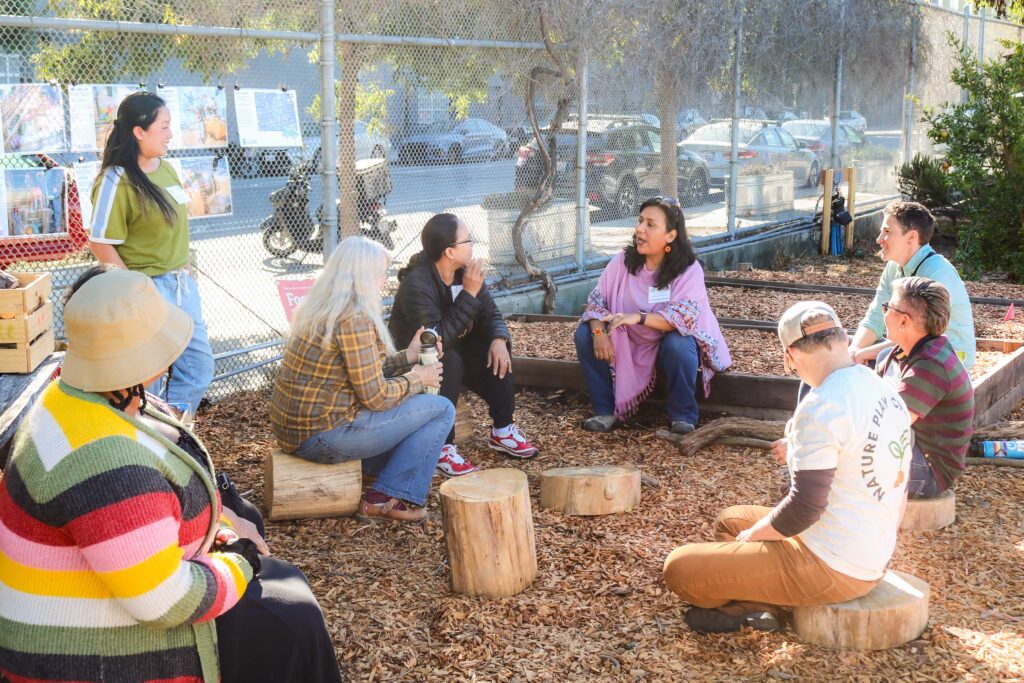
Buckets of marigolds sat around the fire and were being cut and offered to those who had started to gather around the fire. I joined the circle, held a marigold in my palm, and watched how we all had started to cradle the marigold that we had just received on the palms of our hands.
As a Mexican, Day of the Day is one of my favorite holidays. This is a day when I get to reflect on and remember the lives of my loved ones who have passed. I lost my grandmother this year and celebrating these holidays in community, with song, around the fire, with my musical hermana Roopa, and along with my dear brothers and sisters of the Indian diaspora brought a warmth and a light that my heart was needing. Events like these not only share the beauty of our cultures, they also fortify and uplift our spirits. I’ll be forever grateful to live in a city that hosts gatherings like these! – Diana Gameros
A ceremonial fire was not part of my tradition in India. Teachings from the natural world over the years have helped me develop a relationship with fire. My inspiration to try this approach — connecting ecology, conservation, restoration, and discussions about social and environmental justice issues to culture and spirituality — is inspired by observing Indigenous people in India, Nepal, and now here in the United States. Here, I’m learning from our local indigenous leaders about fire as medicine, not to be feared but to be embraced.
I miss my colleague, a Park Ranger, who is not here with us due to the Government shutdown. Over the years, she and I have held this deeply moving ceremony together. She has shown me the power of offering a marigold to the sacred fire as a way of calling our ancestors amongst us. I bring her wishes into this circle.
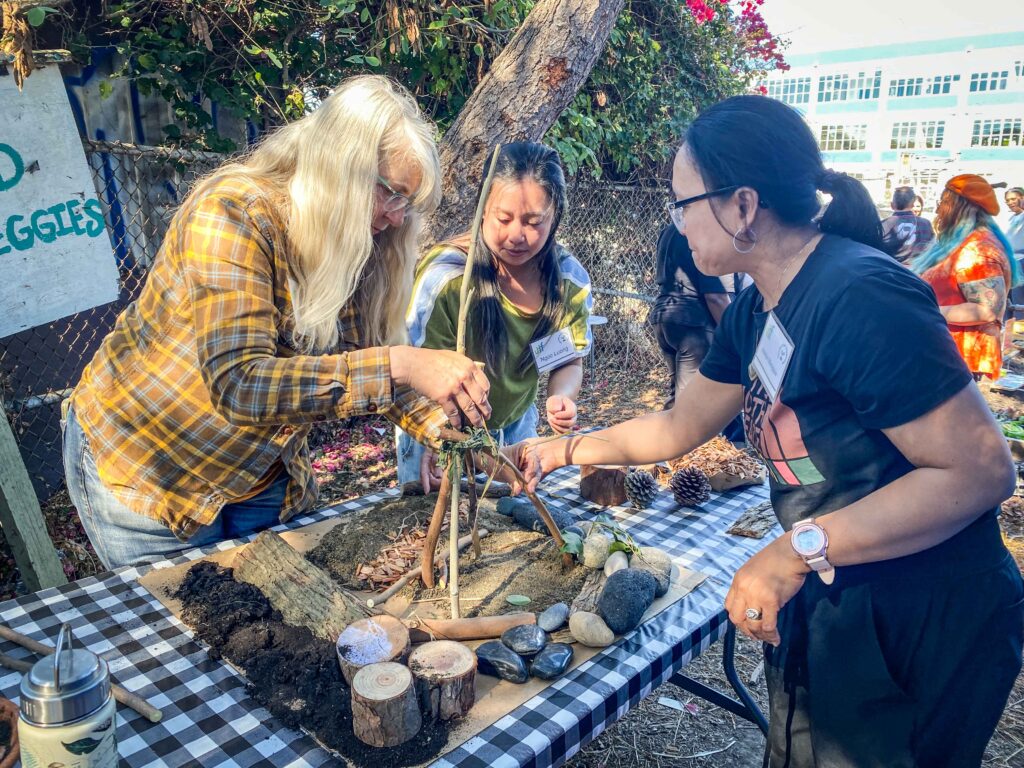
I see one last text on my phone before I close my eyes to start the ceremony. It is from Theresa Harlan, our Coast Miwok elder. The text reads, “Sending you blessings from Benicia State Park. This walk, with the gentle wind and fall sun, is healing. Sharing these healing energies with you.”

The fire’s white smoke, the light of this fall sun, and Diana’s mesmerizing and melancholic guitar strumming in the background open the ceremony. I start by sharing a Nium (North Fork Mono) creation story that I had read in a book series titled Elementals — about a tiny hummingbird who was doing her part to save a large forest fire by transporting water in her beak, one drop at a time from a nearby lake. A Cougar who thinks she is crazy, questions her, “Do you really think you can put out that big fire on your own with your very small beak?” She responds, “The forest is my home. It feeds me. I must do my part.” I share my gratitude for tiny creatures who spread light in ways that often feel invisible.

Roopa joins the storytelling with her song “Chalo Deep Jalaye” (Come, let’s light a lamp). She and Diana are performing a duet for the first time ever. Their songs and music, a mix of English, Hindi, Tamil, and Spanish, are a prayer to the fire. Adults and children walk up to the fire one by one and offer their marigolds. I kneel to the ground, becoming aware of the holiness of this moment, of this circle. I watch a few others kneel with me, too. I look up to the sky and acknowledge the two pods of pelicans that fly above us. Our loved ones are with us.
We—multicultural, multifaith, multigenerational. We became one: one with each other, and one with our natural world. This is the kind of light we were called to be.
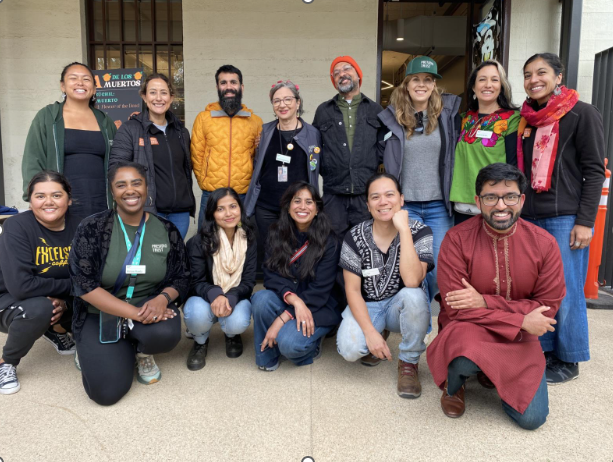
This special event was presented by the National Park Service, Presidio Trust, and the Golden Gate National Parks Conservancy, in collaboration with the Alliance for South Asians Taking Action (ASATA) and Hindus for Human Rights (HFHR).
Credits:

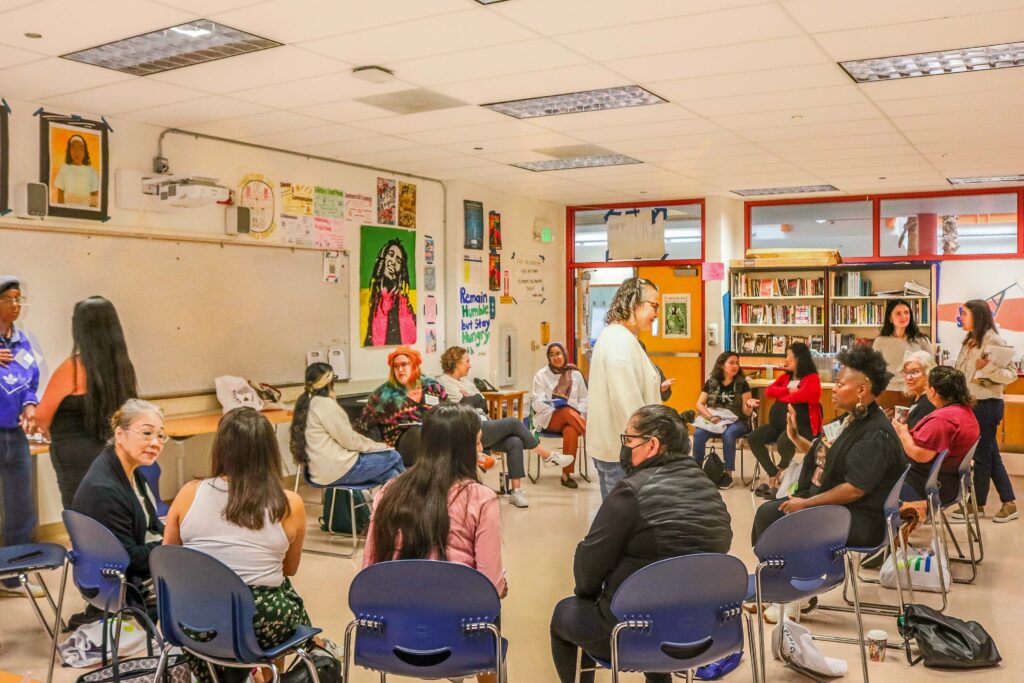
Profound gratitude to our ASATA and HFHR volunteers, and to our artists and culture bearers; Barnali Ghosh and Vishal Subramanyan (our storytellers for the ‘In Light and Dark’ panel) Calpulli Aztec dancers, Roopa Mahadevan and Diana Gameros for the light that you are.
This program is part of Parks As Ancestors and continues to be inspired by the book What Kind Of Ancestor Do You Want To Be, edited by John Hausdoerffer, Brooke Parry Hecht, Melissa K. Nelson, and Katherine Kassouf Cummings.
Photos by Parks Conservancy and ASATA.
About the author
Yakuta Poonawalla is the Director, Community Stewardship and Engagement, at the Golden Gate National Parks Conservancy. She is looking for connections between humans and nature in daily life.